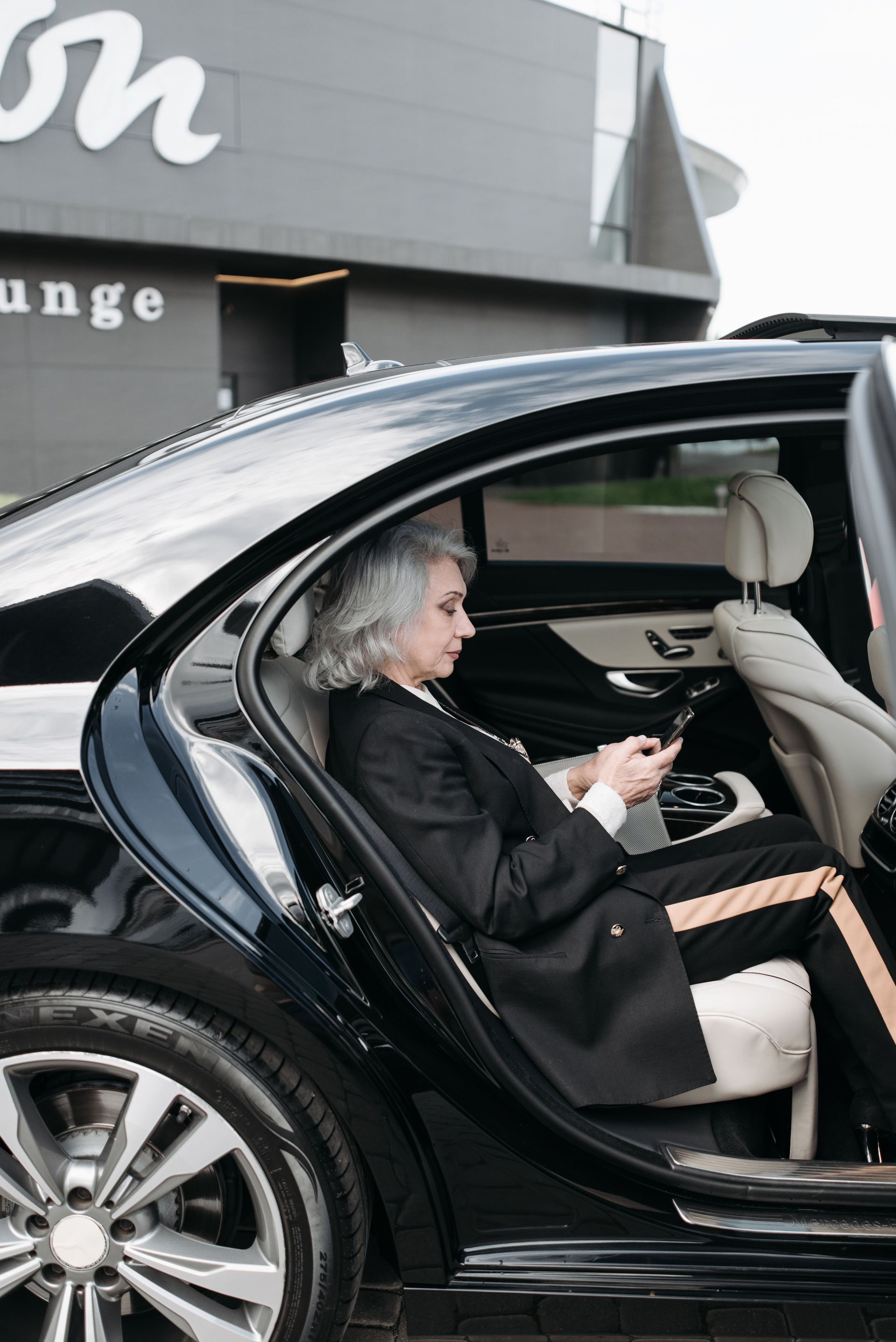
EWR Terminal Pickup Map for Drivers
Finding the right curb at a busy airport can feel like a timed puzzle: one wrong turn, and you’re suddenly looping back with an impatient passenger texting “Where are you?” This guide is for drivers and riders coordinating an EWR terminal pickup who want a simple, repeatable way to plan the approach, confirm the meeting point, and reduce curbside confusion. A clean pickup plan matters because it can cut down on missed connections, unnecessary circling, and last-minute stress—especially as fall travel ramps up and daylight starts disappearing earlier.
If you want a professional option for point-to-point transfers, you can review car & limo services for airport transfers and compare what fits your trip.
Key Points to Know First for EWR Terminal Pickup
- Agree on the terminal and door/column first (and confirm it again after landing) to avoid curbside guessing.
- Use a “map in words” : terminal → level (arrivals/departures) → door/column → vehicle description → backup meeting point.
- Time your approach so you arrive after the passenger is ready for the curb, not when they’re still waiting on bags.
- Have a Plan B (short-term waiting area or a second pass) in case the curb is congested.
- Keep messages short and structured : “Arrivals, Door/Column X, dark sedan, hazards on” is easier to execute than paragraphs.
How to Build a Terminal Pickup “Map” That Actually Works
You don’t need a graphic map to run a smooth pickup—you need a shared, specific meeting script that both driver and passenger can follow. Think of your pickup map as a checklist of coordinates that narrow down the search area step by step.
Step 1: Lock the terminal and airline
Start with the terminal and airline (or flight number). Terminals can change, and passengers may walk to a different curb if they’re unsure—so confirm what the airport displays after landing.
Step 2: Choose the level: arrivals vs. departures
Most pickups happen on arrivals. If you choose departures to avoid crowds, say so explicitly. Mixing levels is a common reason drivers and passengers miss each other while being only one floor apart.
Step 3: Pick a door/column and describe it consistently
Use whatever the passenger can easily read at the curb (door numbers, column identifiers, or a nearby landmark that’s stable). At EWR, curbside meeting points are typically organized by level (Arrivals/Departures) and door/column markings along the curb. The goal is a single, unambiguous “stand here” instruction the passenger can verify by looking up at the nearest sign.
Step 4: Match the vehicle to the curb
Share a quick vehicle description: color, body style, and a distinguishing detail (for example, “black SUV with roof rails”). If multiple similar vehicles are present, that extra detail helps the passenger choose correctly.
Step 5: Define a backup meeting point
Set a fallback location in case the curb is blocked or the passenger exits at the wrong door. A backup can be “one door number higher,” “the far end of arrivals,” or “I’ll loop once and return to Door/Column X.”
EWR Terminal Pickup Map for Drivers (Text-Based, Terminal A/B/C)
Below are simple “maps in words” you can copy/paste into a text. Because curb operations and door numbering can change with construction, events, and traffic control, treat these as coordination templates —then have the passenger confirm the exact door/column they see on-site.
Terminal A: pickup guidance (Arrivals vs. Departures)
Where the curbs are: Terminal A has separate curb levels for Arrivals and Departures . Your plan should name the level first, then the door/column the passenger can read at the curb.
How door/column labeling works: Passengers should look for the nearest posted door number and/or column identifier directly above or beside the curb lane. Ask them to read it exactly as shown (including any letter/zone if present).
TERMINAL A (copy/paste map)
- Default meet: Arrivals level curb
- Passenger instruction: “Go to Arrivals curb and text me the DOOR/COLUMN you are standing at.”
- Driver instruction: “Enter Terminal A, stay on Arrivals, pull to the door/column they text.”
- Backup: “If curb is blocked, stay at the same door/column; I will loop once and return.”
Terminal B: pickup guidance (Arrivals vs. Departures)
Where the curbs are: Terminal B also uses distinct curb levels for Arrivals and Departures . The fastest meetups happen when both sides commit to one level and don’t switch mid-walk.
How door/column labeling works: Door/column signage is the most reliable shared reference because it’s visible from the curb. “Outside baggage claim” is less precise than “Arrivals Door/Column X.”
TERMINAL B (copy/paste map)
- Default meet: Arrivals level curb
- Passenger instruction: “Stand at Arrivals curb and send your DOOR/COLUMN (exact text on the sign).”
- Driver instruction: “Approach Terminal B Arrivals; match the passenger’s door/column before stopping.”
- Backup: “If you exit the wrong door, do not walk to a new spot—text the door/column you see.”
Terminal C: pickup guidance (Arrivals vs. Departures)
Where the curbs are: Terminal C has Arrivals and Departures curb levels. Congestion can make it hard to “hunt,” so a fixed door/column plus a loop rule is usually the cleanest approach.
How door/column labeling works: Have the passenger confirm the level first (“Arrivals” or “Departures”), then the door/column they can physically read at the curb.
TERMINAL C (copy/paste map)
- Default meet: Arrivals level curb
- Passenger instruction: “Arrivals curb → find a DOOR/COLUMN sign → text it to me exactly.”
- Driver instruction: “Terminal C Arrivals → pull to that door/column; dark sedan/SUV description in text.”
- Backup: “If we miss, stay at the same door/column; I will complete one full loop and return.”
Why Timing and Curbside Decisions Matter
Pickup friction usually comes from timing, not driving skill. If you arrive too early, you may be forced to keep moving, which increases the odds of passing your passenger. If you arrive too late, the passenger may drift to a different door or level.
- Time cost: Extra loops add minutes quickly, especially if you miss the right door and must re-enter the terminal road system.
- Coordination cost: Long texts and vague directions create more back-and-forth while both parties are under pressure.
- Safety and flow: Last-second lane changes, abrupt stops, or double-parking increase risk and can draw unwanted attention.
- Trip quality: A calm, predictable meetup sets the tone for the ride—rushed curbside confusion does the opposite.
At EWR, the difference between a smooth pickup and a messy one is often just a clearer meeting plan and better arrival timing.
Common Pickup Mistakes (Checklist)
- Assuming the passenger is at arrivals without confirming: They may exit at departures or a different door after following crowds.
- Using vague directions like “I’m outside”: “Outside” can mean multiple curbs, levels, and ends of the terminal.
- Arriving before bags are in hand: You may be forced to circle while the passenger is still waiting at baggage claim.
- Changing the plan midstream: Switching doors or levels while the passenger is walking creates crossed signals.
- Not sharing a vehicle description: Passengers often see several similar cars and hesitate—right when you need them to move quickly.
- No backup plan: If the curb is blocked, both sides improvise—and improvisation is where pickups go sideways.
A Driver’s Action Plan for a Smooth Terminal Meetup (Checklist)
- Before you enter the airport loop: Text a one-line plan: “Terminal __, Arrivals (or Departures), Door/Column __, [vehicle description], I’ll loop once if needed.”
- As the passenger lands: Ask for a simple status update: “Carry-on only or waiting for bags?”
- Approach only when they’re ready: Aim to arrive when they can step to the curb within a few minutes.
- Hold your lane early: Get into the correct lane well before the curb area so you’re not cutting across traffic at the last second.
- Keep messages structured: Terminal + level + door/column + vehicle. No extra commentary.
- Use a consistent loop rule: If you miss them, complete one full loop and return to the same door/column rather than “hunting.”
- Confirm identity quickly: Ask the passenger to verify your vehicle description before they open the door.
Professional Insight: The Small Detail Most Pickups Miss
A common failure mode is that the driver and passenger describe the location using different reference points—one uses a door/column number while the other uses a vague landmark like “by baggage claim.” Agreeing on a single reference the passenger can physically read at the curb (level + door/column) reduces that mismatch fast.
When It’s Time to Get Help Coordinating a Pickup
Consider using professional support (or at least switching to a more structured plan) if any of the following apply:
- The traveler is unfamiliar with the airport and tends to follow crowds without checking door/level details.
- You’re picking up a group with multiple bags where curb timing is harder to predict.
- The traveler needs extra time or assistance and a rushed curbside handoff would create stress.
- Your schedule is tight and you can’t afford multiple loops or a missed connection.
- Communication is limited (low battery, spotty reception, or the traveler can’t easily text/call).
Frequently Asked Questions
What should I text a passenger to meet faster at the curb?
Send a short, structured message: terminal, level (arrivals/departures), door/column, and your vehicle description. Add one backup instruction like “If you don’t see me, stay at Door/Column X and I’ll loop once.”
Is arrivals always the best place to meet?
Arrivals is common, but not always best. The best meeting level is the one you both agree on in advance and can execute without switching midstream.
How do I avoid missing my passenger if the curb is crowded?
Use a fixed door/column and a simple loop rule. If you miss them, complete a full loop and return to the same spot rather than changing doors while they’re walking.
What if the passenger exits at the wrong door?
Have them read the nearest door/column identifier and send it to you. Then decide whether they should walk to your agreed door or whether you’ll adjust on your next pass—choose one plan and stick to it.
Moving Forward
A reliable pickup “map” is less about perfect directions and more about shared reference points: terminal, level, door/column, and a clear vehicle description. Time your approach to the passenger’s readiness, keep messages short, and use a consistent backup plan when the curb gets messy. For current curbside rules, restrictions, and any designated waiting/holding guidance, verify details with official sources before you drive in.
- External source (official): Port Authority of NY & NJ — Newark Liberty International Airport (EWR) official site: https://www.newarkairport.com/
- External source (official): Port Authority of NY & NJ — Ground transportation / pickup & drop-off guidance (EWR): https://www.panynj.gov/airports/en/newark-liberty-airport/to-from-airport.html
Learn More About Our Services
Need a scheduled EWR pickup with a pre-set terminal/level/door meet point? Use the link below to contact Newark Airport Car & Limo Services and coordinate your ride details in advance.
Get Newark Airport Car & Limo Services first on Google. Add us as a preferred source and Google will show more of our content in your Top Stories and AI results. Add Newark Airport Car & Limo Services as a preferred source on Google →